CASACOR 2026: less minimalism, more personality
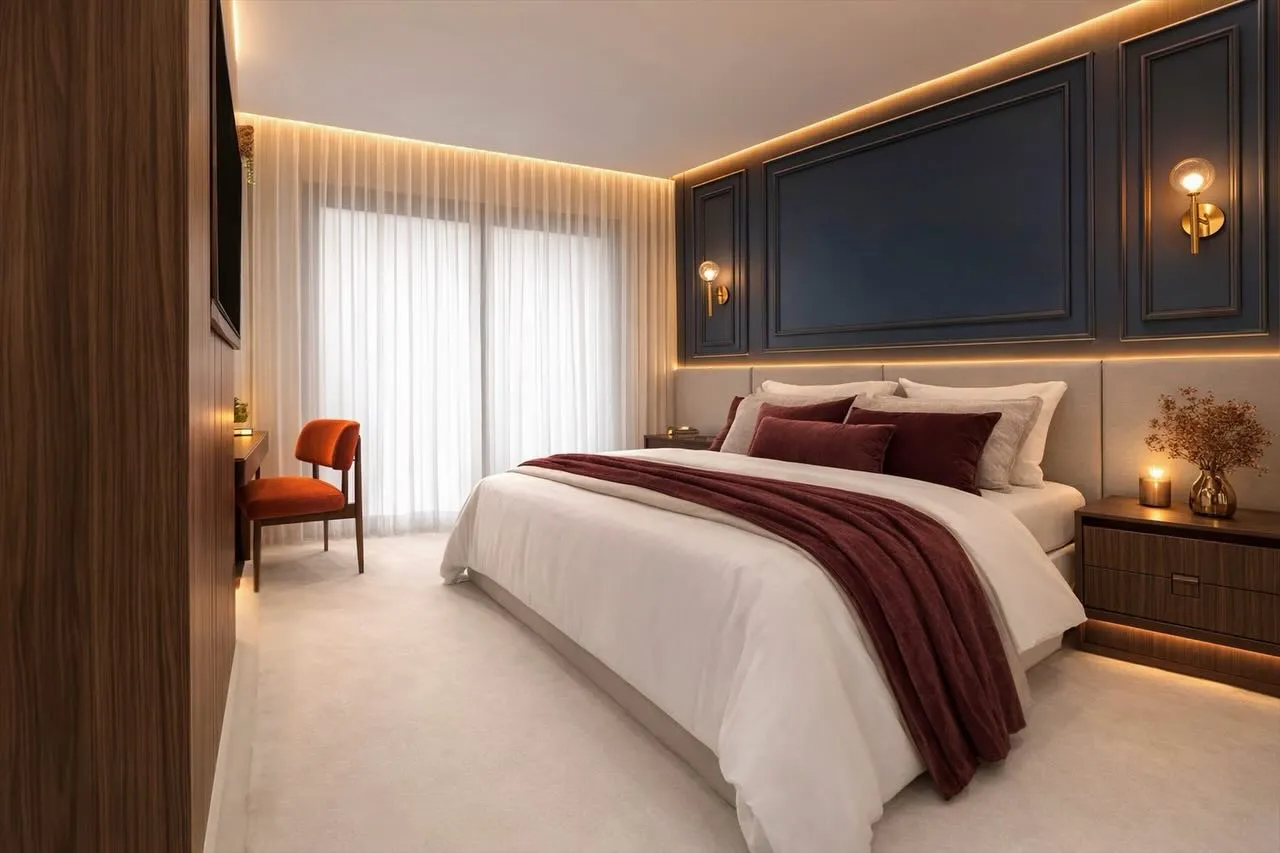
In a post about CASACOR 2026, the atelier highlighted rooms that feel like home, warmer and more expressive, with plenty of red and burgundy, timber, texture and references to past decades. One comeback in particular was celebrated: conversation pits, with sunken sofas.
It is a shift worth noticing, even if you have no plans to paint the living room red.
What changes when colour returns
A neutral room remains a good foundation, but it depends on texture and light to avoid feeling impersonal. Deep colour does a different job: it sets the mood of a space as soon as you enter.
Burgundy works well with timber because both share the same warmth. It also pairs with gold-toned metals and warm-veined stone.
How to use burgundy without overdoing it
You do not have to start with the walls. Some options, from the most discreet to the boldest:
- Textiles. A throw, cushions or a curtain let you test the colour at little risk.
- Upholstery. A velvet armchair or sofa becomes the focal point of the room.
- Joinery. Lacquered doors or a panel bring the colour into the architecture of the room.
- Full immersion. Walls, ceiling and joinery in one colour create a room of strong presence, ideal for powder rooms, TV rooms and spaces used in the evening.
Why sunken sofas are back
A conversation pit arranges people facing one another, at a lower level than the rest of the room. The space invites you to stay and talk.
In practice, a built-in level change depends on the structure and accessibility of the property. Where it is not possible, a low U-shaped sofa and a well-defined rug can suggest the same idea.
Personality without losing the whole
References to past decades work best when they are few and well chosen. One period piece, a striking surface or a strong colour is enough to give identity. Everything else can stay calmer, keeping that element in focus.
The point is not to abandon simplicity, but to let a space say something about the people who live in it.