Recessed lighting at home: how to plan coves and LED strips
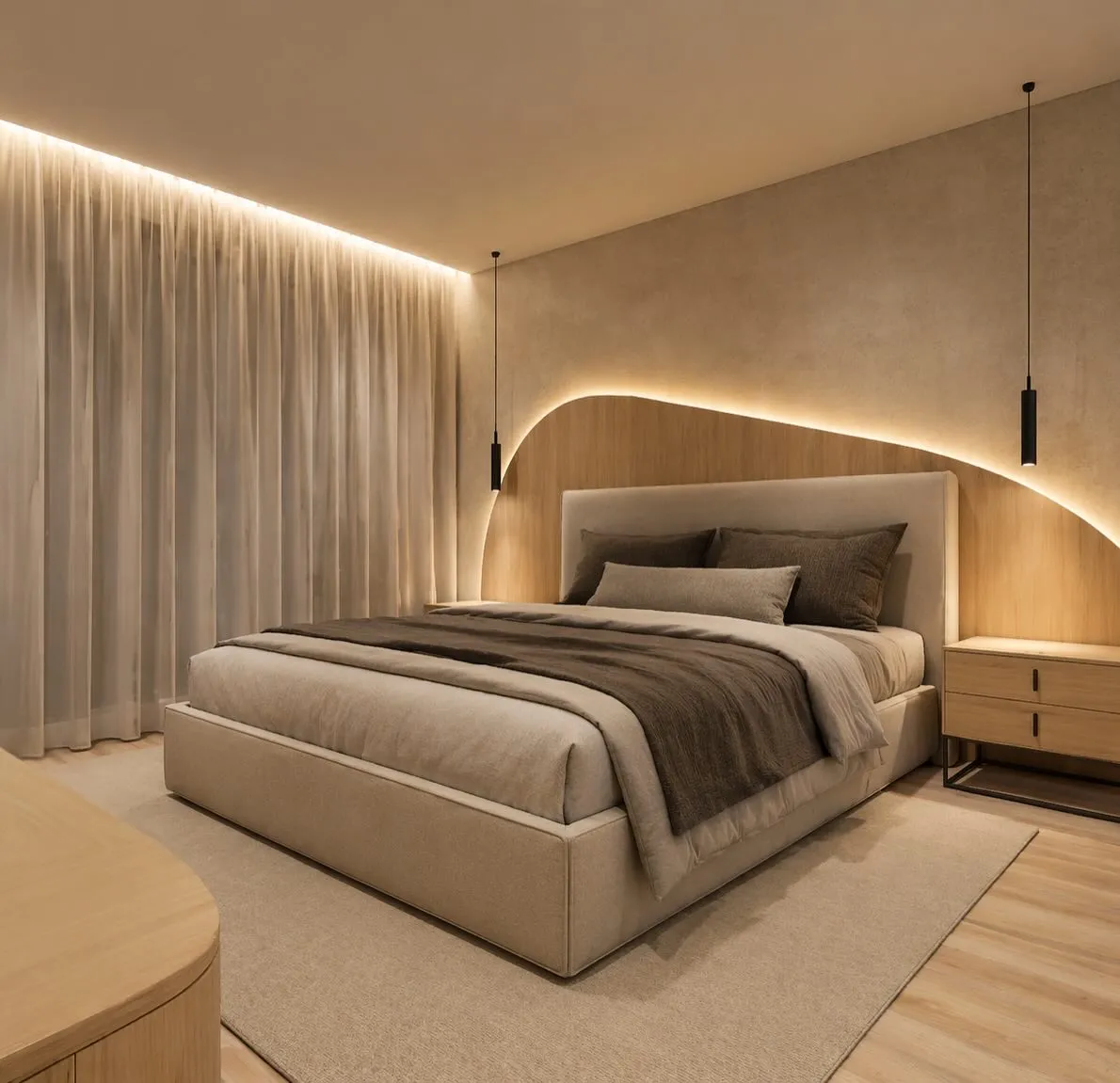
Recessed light is one of the decisions that most changes how a room feels, and one of the hardest to correct later. Once a cove is closed and painted, moving a strip or a driver means breaking the finish.
That is why lighting is best resolved together with the interior design, not after it.
Start with what the light will show
Before choosing a strip, decide what it needs to reveal. Grazing light, which runs very close to a surface, picks out any relief. It works beautifully on natural stone, slatted timber and textured plaster.
The same effect is unforgiving on an uneven wall. If the surface is not regular, grazing light will show every flaw. In those cases, move the source further away or choose a finish that hides the undulation.
Colour temperature and colour rendering
At home, tones between 2700 K and 3000 K tend to feel the most welcoming. Cooler tones usually work better in task areas such as worktops.
The other number that matters is the colour rendering index, or CRI. The closer it is to 100, the truer the colours of your materials. For timber, stone and fabric, look for products with a CRI of 90 or above. Beautiful timber can look grey under a poor-quality strip.
What needs to be on the drawing
- The profile. An aluminium profile with a diffuser hides the individual LED points and helps dissipate heat.
- The cove opening. It determines whether someone sitting or lying down will see the strip directly.
- The driver location. It needs ventilation and access for maintenance. A discreet hatch avoids breaking the ceiling later.
- The circuits. Separating ambient and task lighting lets the same room be used in different ways.
- Dimming. Decide before construction, because it affects both the driver type and the wiring.
Test before closing up
Whenever possible, connect a length of strip on site and look at the result at night, on the real material. A stone sample under the final light tells you far more than any image.
Well-planned light is barely noticed as equipment. What you notice is the material, the height of the room and the feeling of being there.